Amendment to South Korea’s Framework Act for the Settlement of Past History Clears the Way for a Third Truth and Reconciliation Commission
Expanded authority and improved victim access, with lingering institutional constraints.

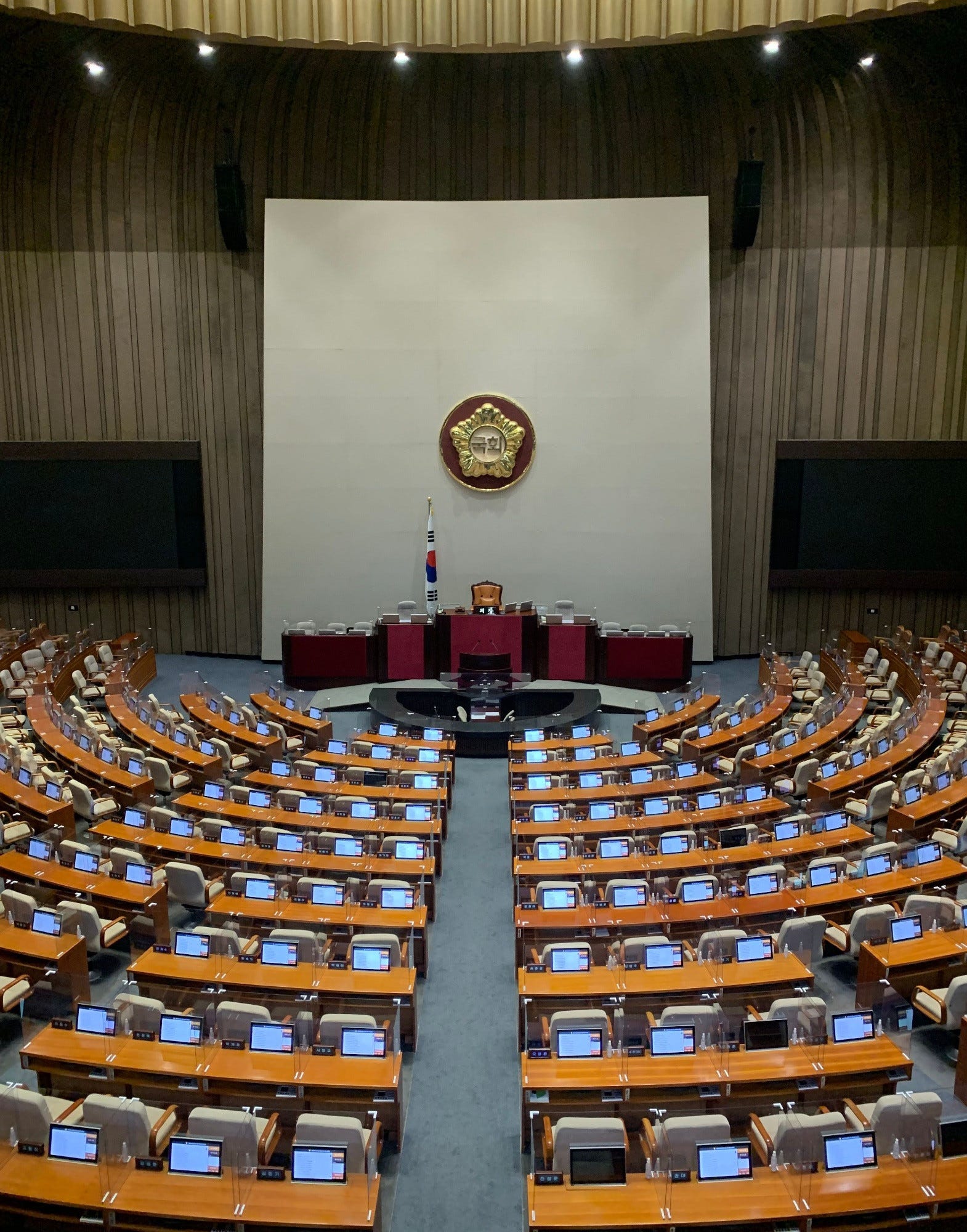
South Korea will establish its Third Truth and Reconciliation Commission on February 26 following today’s passage of an amendment to the Framework Act for the Settlement of Past History. The move responds to appeals from victims of state violence who had not previously applied to the Commission as well as those whose cases were not conclusively investigated. That the Commission has been reestablished reflects sustained efforts by victims, advocates, and a group of committed lawmakers. 23 separate bills were ultimately consolidated into one by the Public Administration and Security Committee.
South Korea’s Path to Repeated Truth Commissions
The second Truth and Reconciliation Commission was launched under the Moon Jae-in administration on December 10, 2020. It concluded its investigative work on May 26, 2025, and published a comprehensive final report on November 18, 2025. Its legal dissolution is also scheduled for February 26, and this is why sponsoring lawmakers sought to move the amendment bill to a vote quickly to ensure at least some institutional continuity. The amendment authorizes a third Commission to resume and adjudicate 2,111 cases that were suspended before any determination could be reached due to time and resource constraints.
The Democratic Party and third-party lawmakers opposed extending the mandate of the second Commission under its third and final chairperson, Park Seon-young, a former conservative politician appointed by Yoon Seok-yeol days after his December 3 declaration of martial law and before his impeachment by the National Assembly. The second Commission had already become politicized under its previous chairperson, Kim Kwang-dong. His controversial remarks and questionable conduct eroded confidence in the Commission’s impartiality. Park did little to stabilize the institution, instead drawing further negative attention through careless remarks and personal indiscretions.
The amendment bill’s passage had long been expected given the Democratic Party’s legislative majority. The delays until now stemmed largely from procedural obstruction rather than substantive opposition. In December, extended filibusters by PPP lawmakers, led in part by Na Kyung-won, forced National Assembly Speaker Woo Won-shik to suspend proceedings. The rival parties eventually agreed to set aside their disputes and convene a plenary session today. The agenda included roughly ninety bills classified as non controversial. The amendment passed with 168 votes in favor, 8 against, and 18 abstentions.
Several PPP lawmakers supported the bill. Among them were representatives from Busan, where major group confinement facilities investigated by the second Commission were located. Jo Ji-yeon, who represents Gyeongsan, where the 1950 Cobalt Mine Massacre occurred, also voted in favor, as did Lee Man-hee, whose constituents were directly affected by remarks made by former Commission chair Kim Kwang-dong that implied state massacres were acceptable in wartime.
Very few countries have operated more than one general truth commission, and reaching a third is rare. In South Korea’s case, the first Truth and Reconciliation Commission, which operated from 2005 to 2010, was preceded by a series of ad hoc investigative committees with narrower mandates, often focused on single incidents or specific categories of cases, such as Jeju 4.3 and suspicious deaths. As these bodies carried out their work, additional cases and patterns of abuse emerged that they lacked the authority or capacity to investigate fully.
The first Commission made substantial progress in documenting civilian massacres during the Korean War. Survivors of the Brothers Home later pressed for a second Commission so their cases could be formally examined. During the second Commission, foreign adoptees received the first official acknowledgement that human rights violations occurred in the inter-country adoption process. However, few individual cases were confirmed because commissioners were divided over whether victim status could be recognized in the absence of documentary evidence. Applicants maintained that the absence of records itself pointed to a structural human rights abuse. A similar problem arose within the bureau handling Korean War cases. Conservative commissioners relied on documents produced by the anticommunist authoritarian state as evidence that victims were criminal collaborators with the North. These records were generated under a system of guilt by association, which fundamentally undermines their credibility.
Expanded Mandate and Institutional Design
The amendment revises the scope of the Framework Act to explicitly include human rights violations committed in social welfare institutions, including adoption agencies and collective confinement facilities. Its reach extends beyond state run institutions to include private facilities that were supported, managed, or supervised by the state. It also clarifies that human rights violations may be investigated up to the establishment of the National Human Rights Commission. Under the new structure, the third Commission is expected to create a separate bureau to handle these cases, rather than folding them into the second bureau’s broader human rights mandate, a change intended to address the scale and specificity of institutional abuses.
As with the previous commission, there is a two-year window set for truth-seeking petitions, starting from the date of the law’s enforcement. The Commission may resolve to extend this, if circumstances demand. The investigation period is fixed at three years from the date of the decision to commence the first investigation, but this may be extended twice, with each extension being one year. Further, Article 25 of the Amendment Bill relaxes conditions for the TRC to initiate ex-officio investigations, eliminating the need for truth-finding applications by individuals if significant human rights violations have been identified in the course of any investigative work.
The composition of the Commission and how commissioners are selected differs. Previously there were nine commissioners, including the Chairperson, nominated by the President. Supporting the Chairperson were two Standing Commissioners with equivalent rank of a Deputy Minister (one from each of the two major parties) and six non-Standing Commissioners, with the ruling and opposition blocs each nominating three. The Amendment Bill increases the total number to 13. The President would select three and the Speaker of the National Assembly one. The two negotiating parties (i.e. parties with 20+ seats) in the Assembly would nominate four each, and one would be chosen by non-negotiating parties.
This new structure largely favors the Democratic Party, given Lee Jae-myung’s presidency and the party’s simple majority in the Assembly. Although the Speaker is formally independent, he was a Democratic Party member prior to his election. The non negotiating bloc also tilts center left or progressive, by a margin of 18 to seven. Against the backdrop of controversies surrounding past chairpersons, the law now includes an impeachment clause for the Commission chair, reflecting an effort to curb politicization and provide a formal mechanism for removal in cases of misconduct or loss of trust.
Expanded Authority and Victim-Focused Measures, with Structural Limits
The amendments adopted alongside the creation of the third Commission strengthen its legal framework, but whether these changes translate into real power remains uncertain.
On paper, the Commission’s authority to obtain records is broader than before. The amendment empowers it to seek search and seizure warrants and to file complaints against institutions that refuse to cooperate, authority that was originally intended to override the National Intelligence Service’s reliance on the NIS Act, the Act on the Staff of the NIS, the Military Secret Protection Act, and the Military Base and Facility Protection Act as grounds for non disclosure. However, this power was narrowed during legislative review. Under the revised provision, a competent minister may order the withholding of materials within five days if they are deemed to involve national secrets related to military affairs, diplomacy, or inter-Korean relations. The justification offered is that disclosure of sensitive information, including details about the NIS’s organization, locations, personnel, or budget, could disrupt intelligence operations. Without an independent mechanism to review or override such ministerial determinations, key records may still remain inaccessible, limiting the depth of the Commission’s investigations.
Referral powers also appear more flexible, allowing the Commission to forward suspected crimes to appropriate investigative bodies rather than relying solely on prosecutors. The original draft would have required the Commission to file complaints with the Prosecutor General. However, the Legislation and Judiciary Committee recommended revising this provision in light of structural uncertainty surrounding the prosecution system. The Prosecutor’s Office is scheduled for abolition in October, and under current law prosecutors are limited to investigating only major crimes, such as economic offenses or corruption, as defined by presidential decree. It was therefore unclear whether prosecutors could lawfully act on cases referred by the Commission. While redirecting referrals avoids this legal contradiction, they remain non binding. The Commission cannot compel investigations or prosecutions, and the diffusion of investigative authority risks weakening accountability rather than strengthening it.
Finally, the new law makes it easier for victims to seek compensation, especially for cases that were previously blocked because too much time had passed. Courts have recognized that in cases involving mass killings or serious human rights abuses, it can take decades for the truth to come out. Because of this, the law removes the rule that normally cuts off claims based solely on how long ago the abuse occurred. At the same time, victims still must file a claim within three years of learning what happened and who was responsible. The law also gives people whose claims were previously rejected because of time limits a new three year window to try again.
This is an important step, but it does not guarantee compensation. For now, victims must still receive a favorable decision from the Commission and then pursue their claims through the courts, where the state may continue to resist. Standardized compensation amounts and disbursement procedures may be set later through separate legislation, but there is no timeline for doing so. The issue is likely to become politically contentious and may influence the level of relief that victims recognized in the future are ultimately entitled to receive.
These observations reflect my own reading of the legislation, committee materials, and staff union reports, as well as interviews with former Commission officials. There are genuine positives in the revised law, particularly its expanded scope and improved access to remedies for victims. Provisions have also been made for victims to submit their views during the truth finding process and to gain greater transparency into investigations. At the same time, gaps and loopholes remain. The legislation leaves room for discretionary obstruction, does not address the training or professionalization of investigators, and provides little guidance on ensuring consistent standards across bureaus. How these unresolved issues are handled in practice will shape whether the third Commission avoids the problems that plagued its predecessor. Nevertheless, I will be watching its work closely and remain hopeful that it delivers on its promise.